

CPAP vs Oral Appliance: Which Is Easier to Live With?
For adults with mild to moderate sleep apnea (or- even undiagnosed), choosing the right treatment can feel overwhelming. CPAP has long been considered the gold standard, but it is not the only option. Many of our patients want a solution that fits their busy lives, is discreet, and is easy to maintain.
As dental sleep professionals, we help patients understand the differences between CPAP therapy and oral appliance therapy so they can make an informed decision that supports better sleep and daily energy.
How CPAP Works
CPAP, or Continuous Positive Airway Pressure, uses a machine to deliver steady airflow through a mask, keeping the airway open during sleep. It is highly effective at reducing apnea events and preventing airway collapse.
While CPAP is very effective clinically, many adults experience challenges with:
Comfort and mask fit
Noise from the machine
Traveling with the equipment
Feeling restricted while sleeping
These factors can make CPAP difficult to use consistently for some patients.
How Oral Appliance Therapy Works
Oral appliance therapy involves a custom-fitted device worn in the mouth during sleep. The device gently repositions the lower jaw to keep the airway open.
Benefits of oral appliances include:
Quiet and unobtrusive
Comfortable and portable
Easy to incorporate into travel and daily routines
Clinically supported for mild to moderate sleep apnea
Most of our patients appreciate the simplicity and lifestyle flexibility of oral appliances compared with CPAP machines.
CPAP vs Oral Appliance
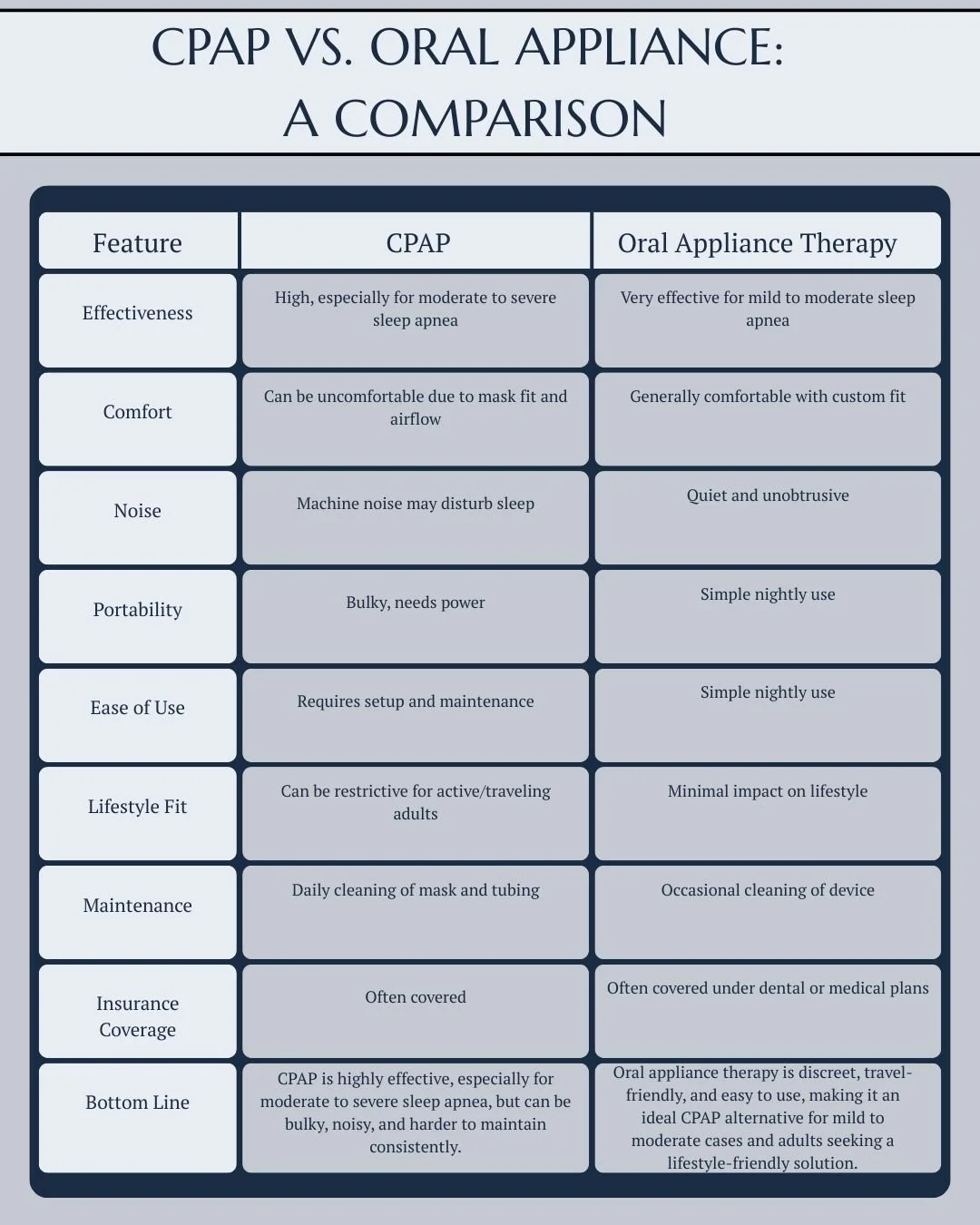
Which Option Is Right for You?
There is no single solution that fits everyone. Oral appliance therapy is often preferred by younger, busy adults who want a discreet and travel-friendly option. CPAP remains the most effective choice for moderate to severe cases, especially when apnea events are frequent.
A professional evaluation helps determine:
Severity of your sleep apnea
Airway anatomy
Comfort preferences
Lifestyle needs
Long-term goals
By combining clinical guidance with personal preferences, we help patients select the treatment they are most likely to use consistently.
The Bottom Line
Both CPAP and oral appliance therapy are effective treatments for sleep apnea. The best choice depends on your individual situation, comfort, and lifestyle. For many adults, oral appliances provide a CPAP alternative that is easier to live with and fits seamlessly into nightly routines.
Consistent treatment improves sleep quality, daytime energy, and overall health, no matter which option is chosen.
Book with us below or get more information!